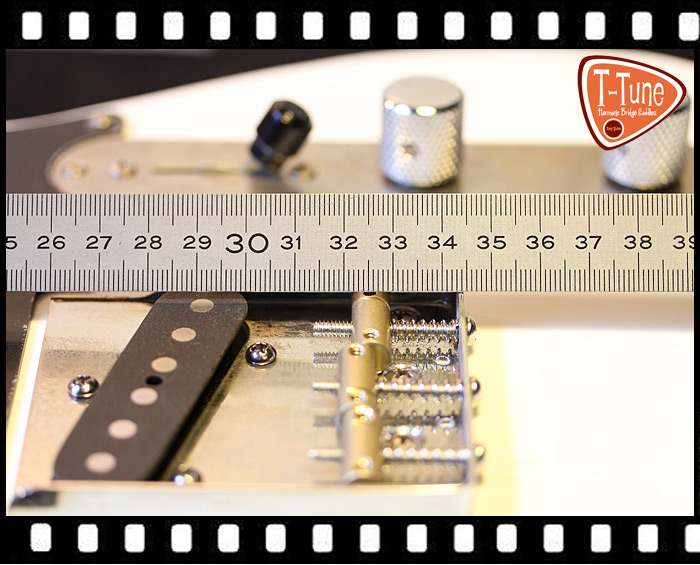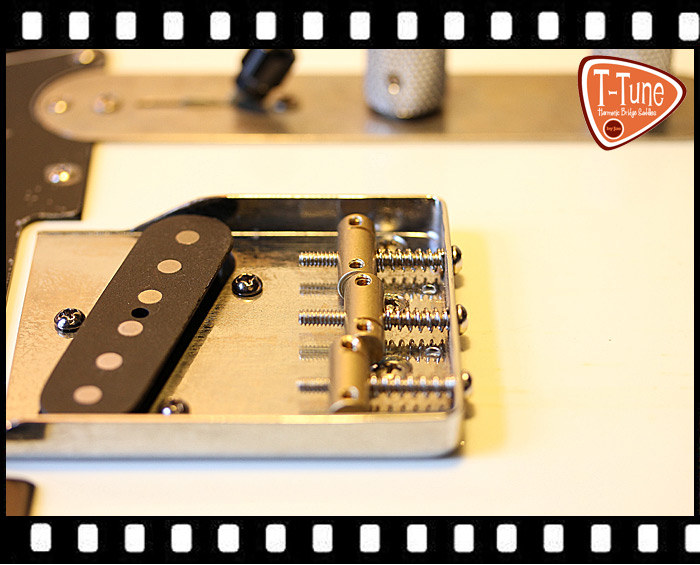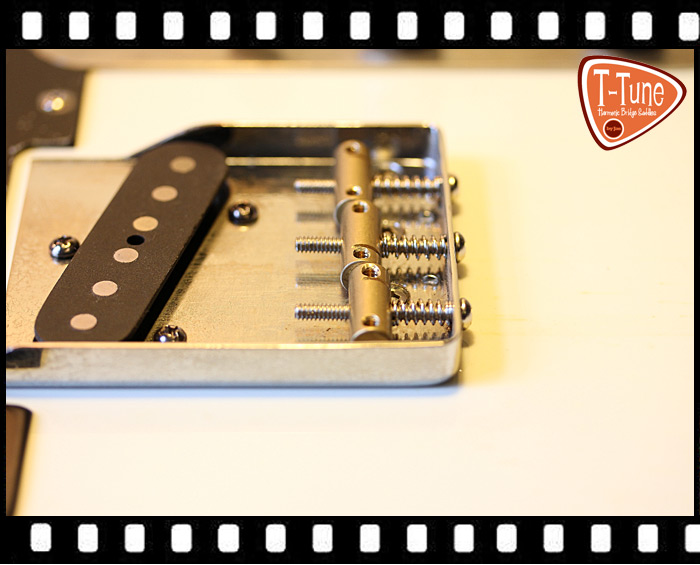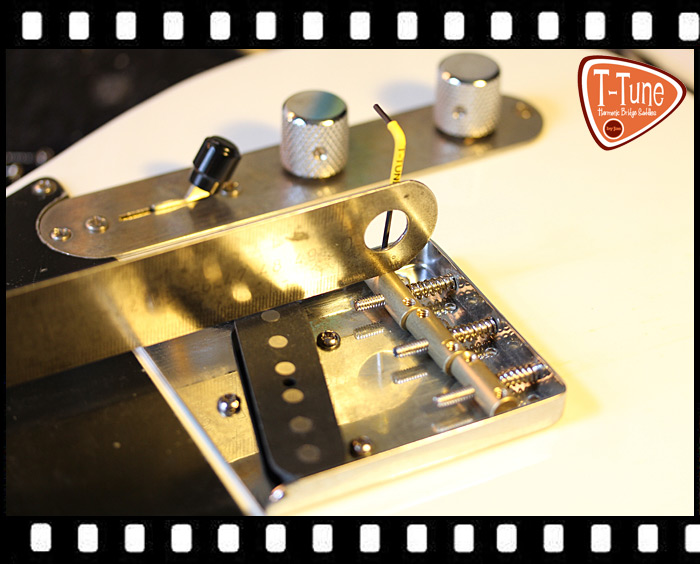

Fitting
-
Remove the strings and the existing bridge saddles.
-
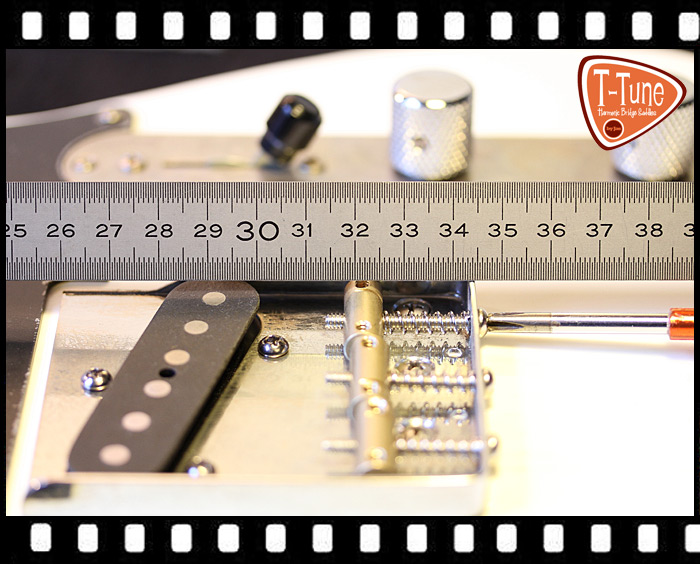
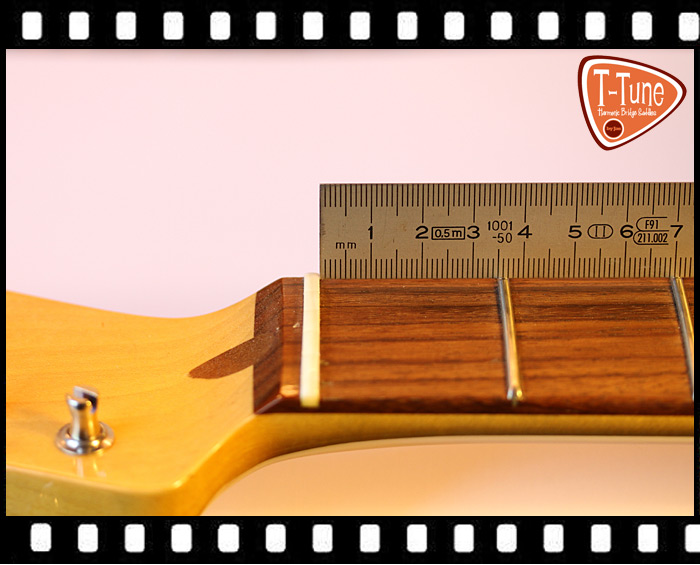
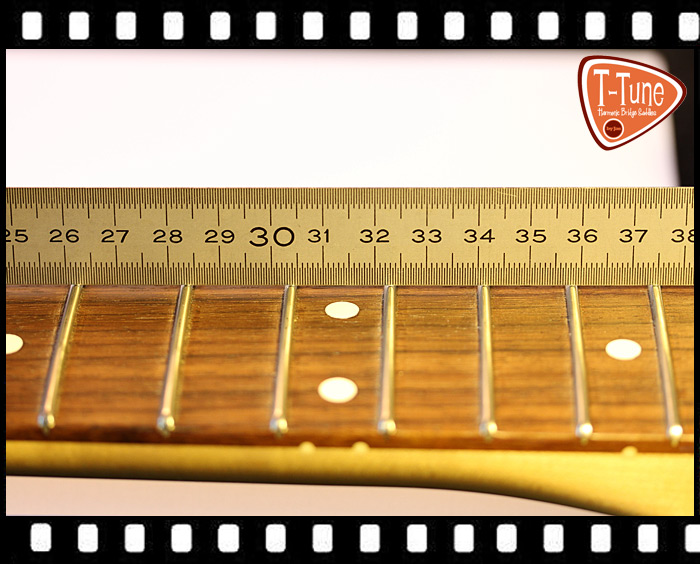
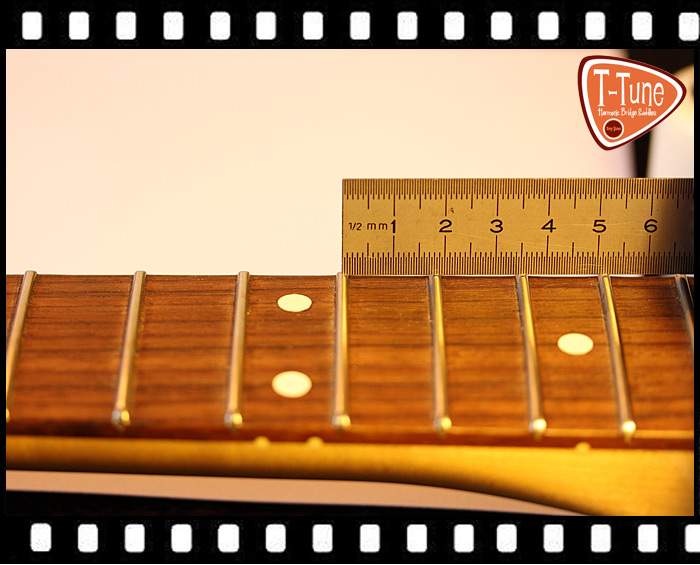
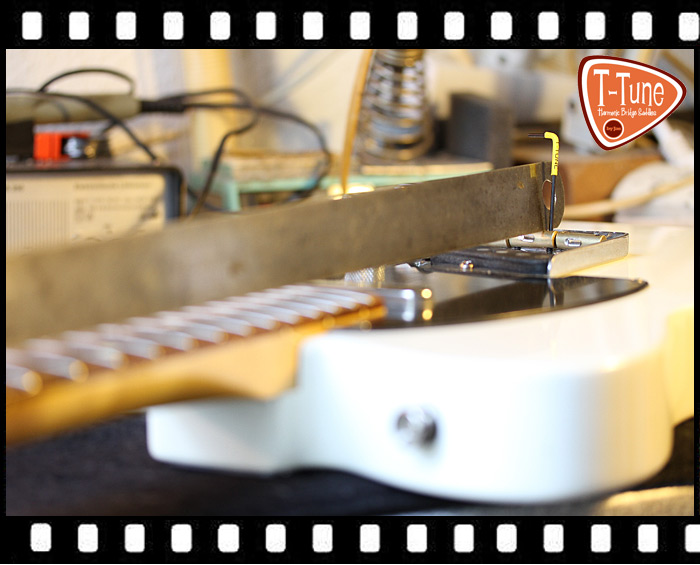
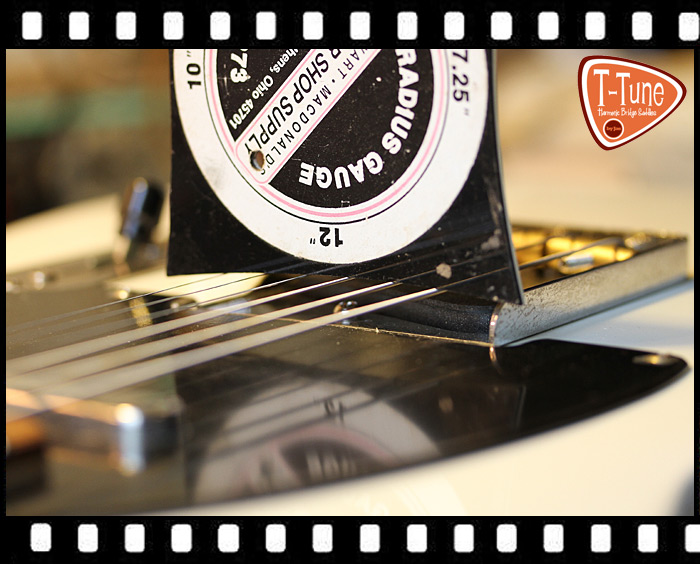
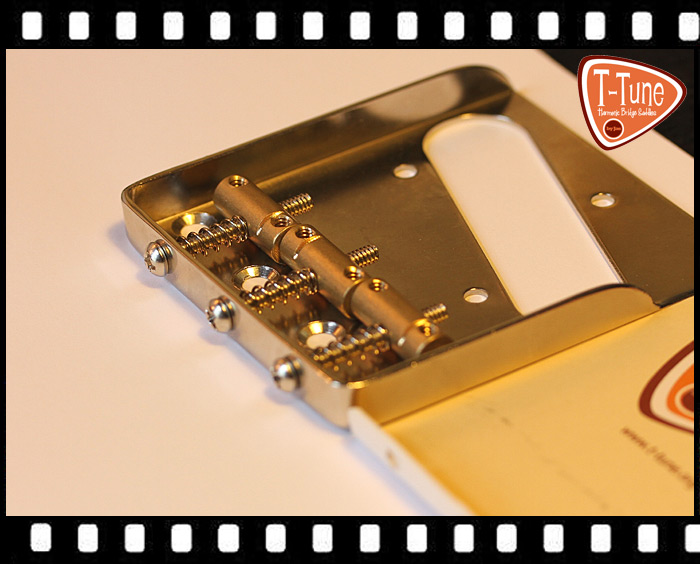
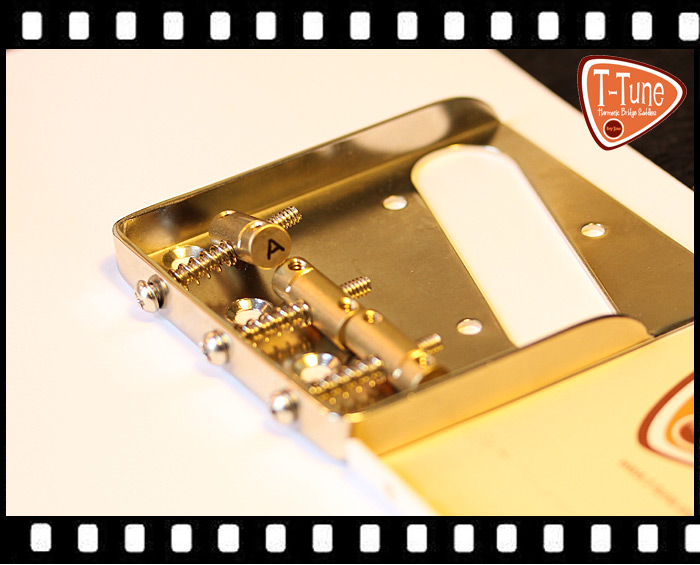
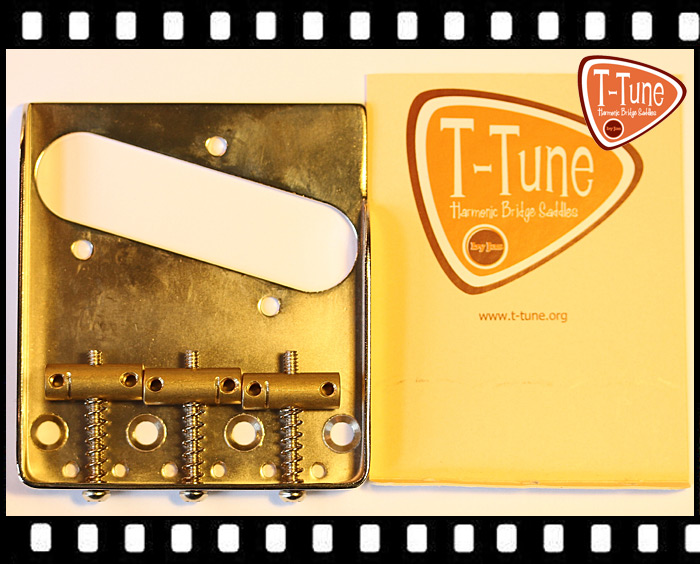
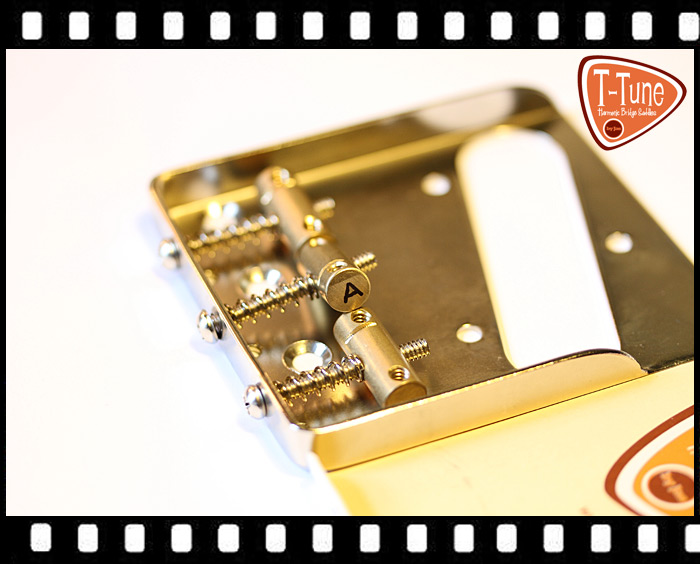
Position the saddles on the mounting plate in the same configuration as in the packaging. See the following picture gallery:
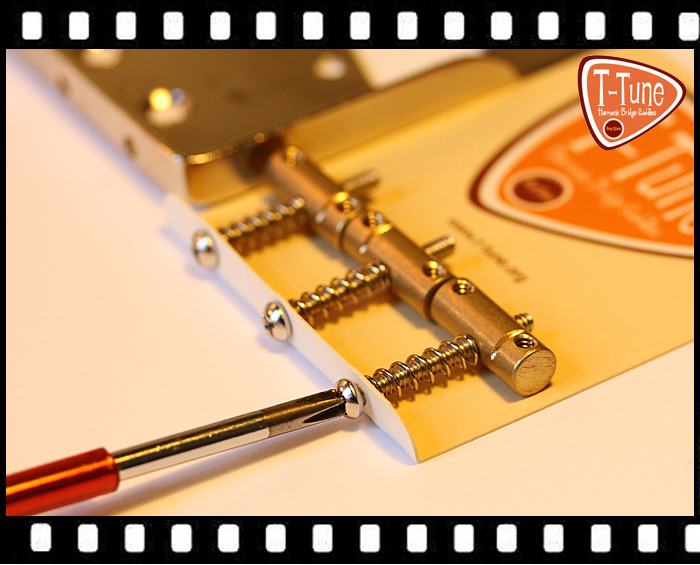
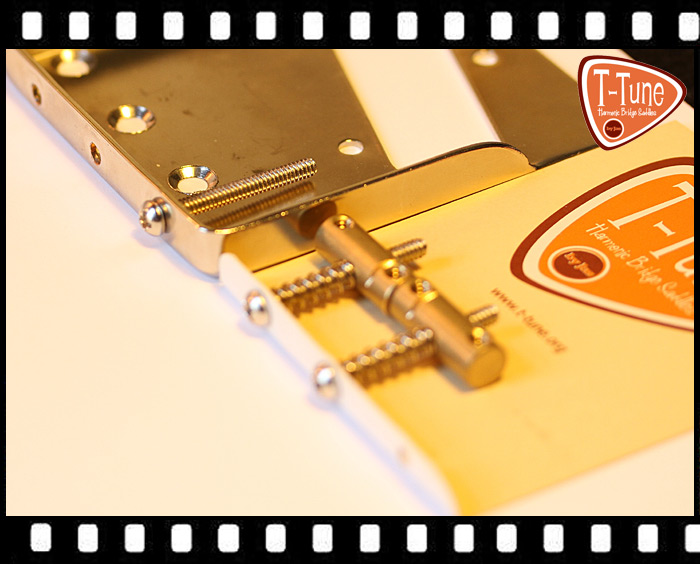
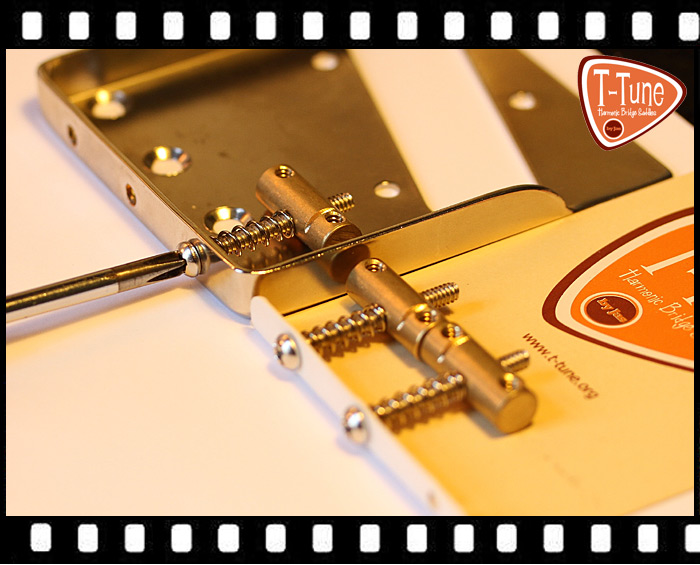
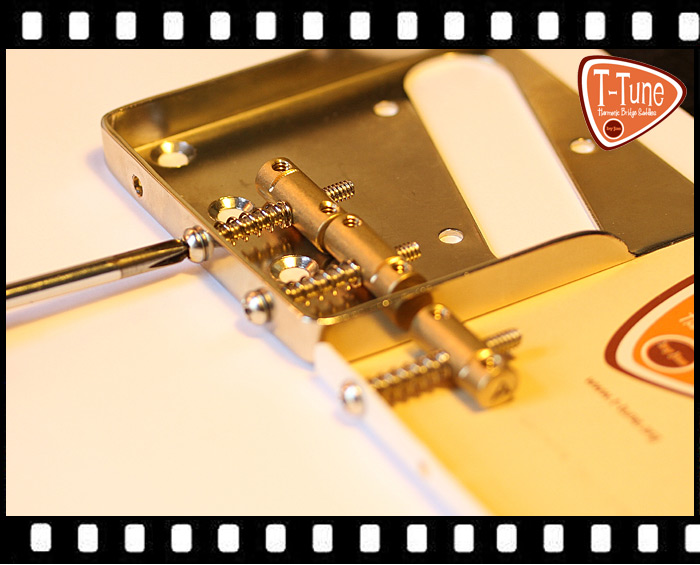

Set-up
1) Use the length adjustment screws to approximately set the position of the bridge saddle. Measure the distance between the inner edge of the nut and the centre of the 12th fret and use this distant to determine the position of the saddle – in other words, set the first saddle so that the end of the string slot for the high E string is approximately the same distance from the 12th fret as is the nut to the 12th fret. On a Telecaster this distance is 324 mm, as the distance from the nut to the bridge is 648 mm (the scale length). Position the middle saddle (G and D strings) a further 1,5 mm away from the nut and the third saddle (A and low E strings) a further 1,5 mm away from the nut again.


2) With the aid of a ruler, set the temporary string height (bridge height) by means of the height adjustment screws
provided.


3) Put the strings on the guitar and tune them. Check the neck relief, string height and bridge radius. The latter should correspond to the fingerboard radius, with the thicker bass strings a little further away from the fingerboard than the thinner ones. Adjust as necessary.

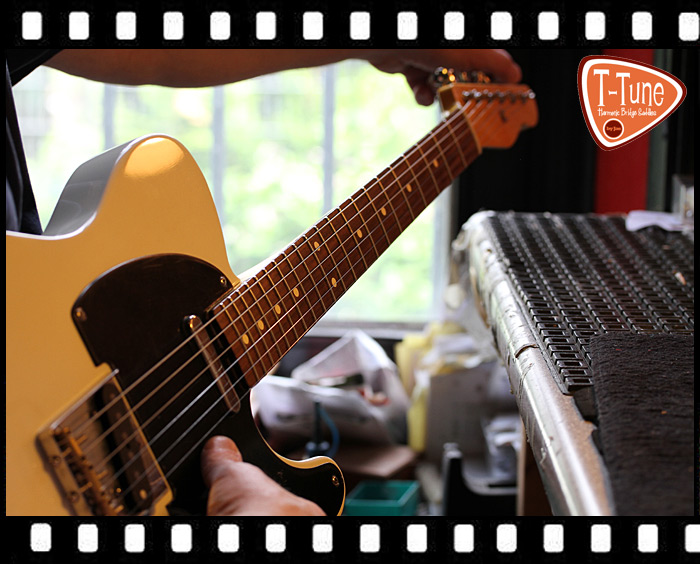
4) Hold the guitar in the normal playing position and tune it as exactly as possible with the aid of an electronic tuning device. Play the open high E string; check that it is in tune, then fret it at the 12th fret and play it again. The fretted note and the open-string note should give exactly the same reading on the electronic tuner. If the fretted note is higher, slacken off the high E and B strings and move the saddle away from the neck with 1-2 clockwise rotations of the screwdriver. Tighten the strings again and check if they are in tune. The reading on the electronic tuner will tell you if the distance you have moved the saddle is sufficient. In practice, you will probably have to repeat this procedure several times before achieving the desired result. It is vitally important that you slacken the strings every time you adjust the position of the saddle – this prevents unnecessary wear and tear to the screws and your tools. It is equally important that you test the pitch of the strings in normal playing position, so that the weight of the instrument does not result in a false reading.